Introduction To Surrealism
Surrealism was a movement that followed the Freudian concepts of the subconscious, dreams and repressed thought. Freuds book "The Interpretation of Dreams" emphasised the importance of liberating suppressed thoughts and was a great influence to the start of surrealism.
Art from this movement often referenced dreams and the subconscious, preaching for society to rethink their existing conceptions of dreams and reality. Photography for surrealists was a means of communicating that the day to day life most people take for granted is strange and interesting. Surrealist photography picked boring and familiar parts of society and singled them out, defamiliarising them with the medium of photography and forcing ordinary things to be questioned and analysed out of context.
'In cutting into the body of the world, stopping it, framing it, spacing it, photography reveals that world as written. Surrealist vision and photographic vision cohere around these principles.'
— Rosalind Krauss, (1985) p.40
In this essay I will be exploring the subject matter commonly used in this movement and techniques that were used to express the surrealist message, such as juxtaposition, automatism and photograms. I will compare examples of surrealist art to photography to explain the advantages photography has, as a quicker and more automatic process than other mediums used in the surrealist movement.
'The frame announces that between the part of reality that was cut away and this part there is a difference'
— Rosalind Krauss, (1981), p.31
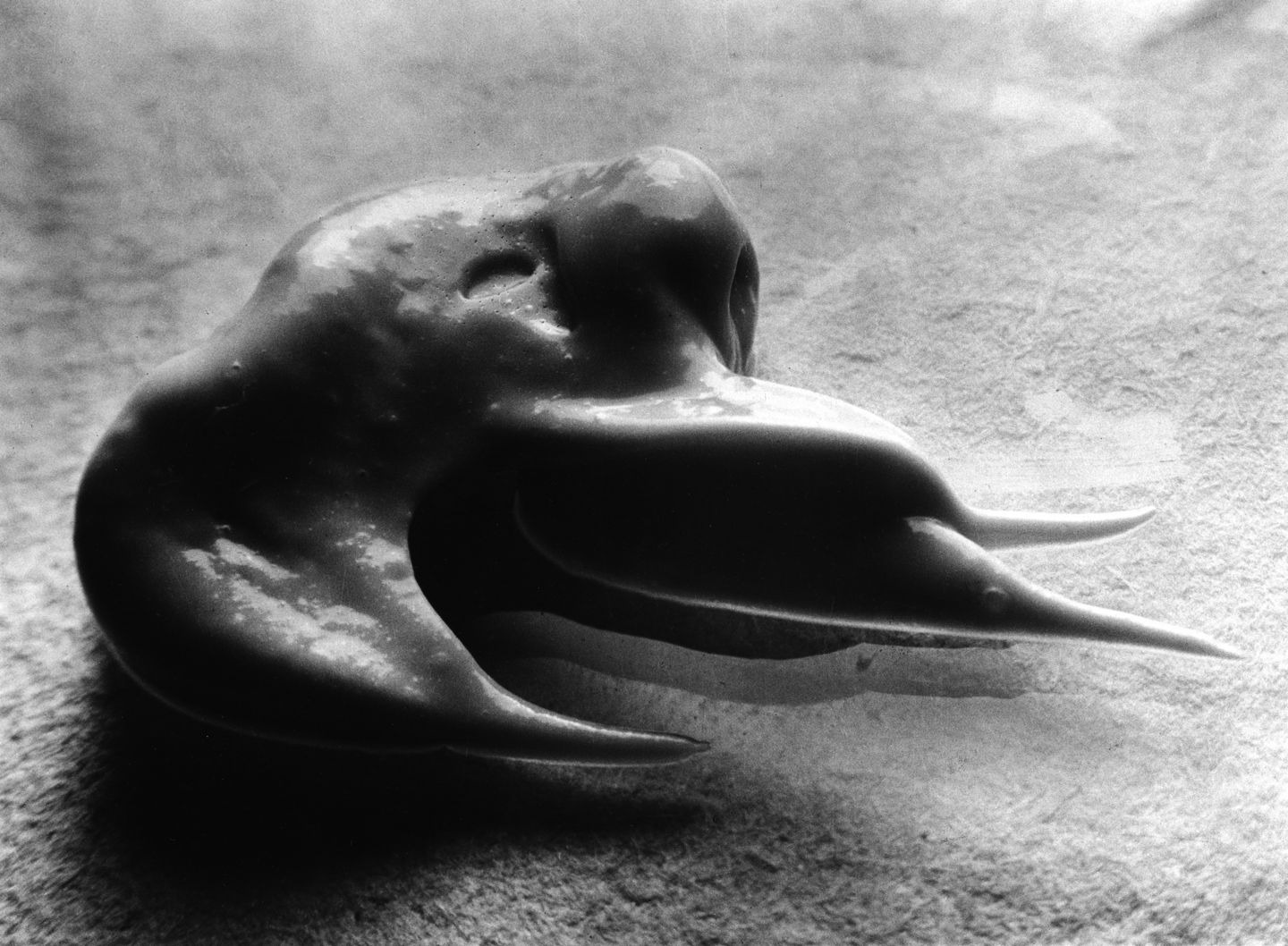
Brassaï — Involuntary Sculptures, 1933
In this Photograph by Surrealist photographer Brassaï, a portion of toothpaste has taken on a molded intricate shape. Becoming one of his 'involuntary sculptures' has abstracted it from its usual scene and placing it into a different category of object. The contour of soft light and dark shadows change the tooth paste into an object of aesthetic value. Speaking on Brassaï's Involuntary sculptures Katherine Conley says:
'His magnification of everyday Western ephemera transforms them into mysterious aesthetic objects comparable in their strangeness to the exotic tribal art brought back from ethnographic expeditions'
This appreciation of an everyday object that would go undetected is typical of the surrealist message of the everyday as strange. The surrealists used photography in an effort to change people's perception of reality and to comment on the society of the world around them, in this case questioning the fetishising of objects as sacred.
"Brassaï problematizes the Western primitivist notion of the tribal fetish and concurrently asks whether there might not be something sacred buried in our most ordinary and familiar everyday objects."
— Katherine Conley, (2003) p.135
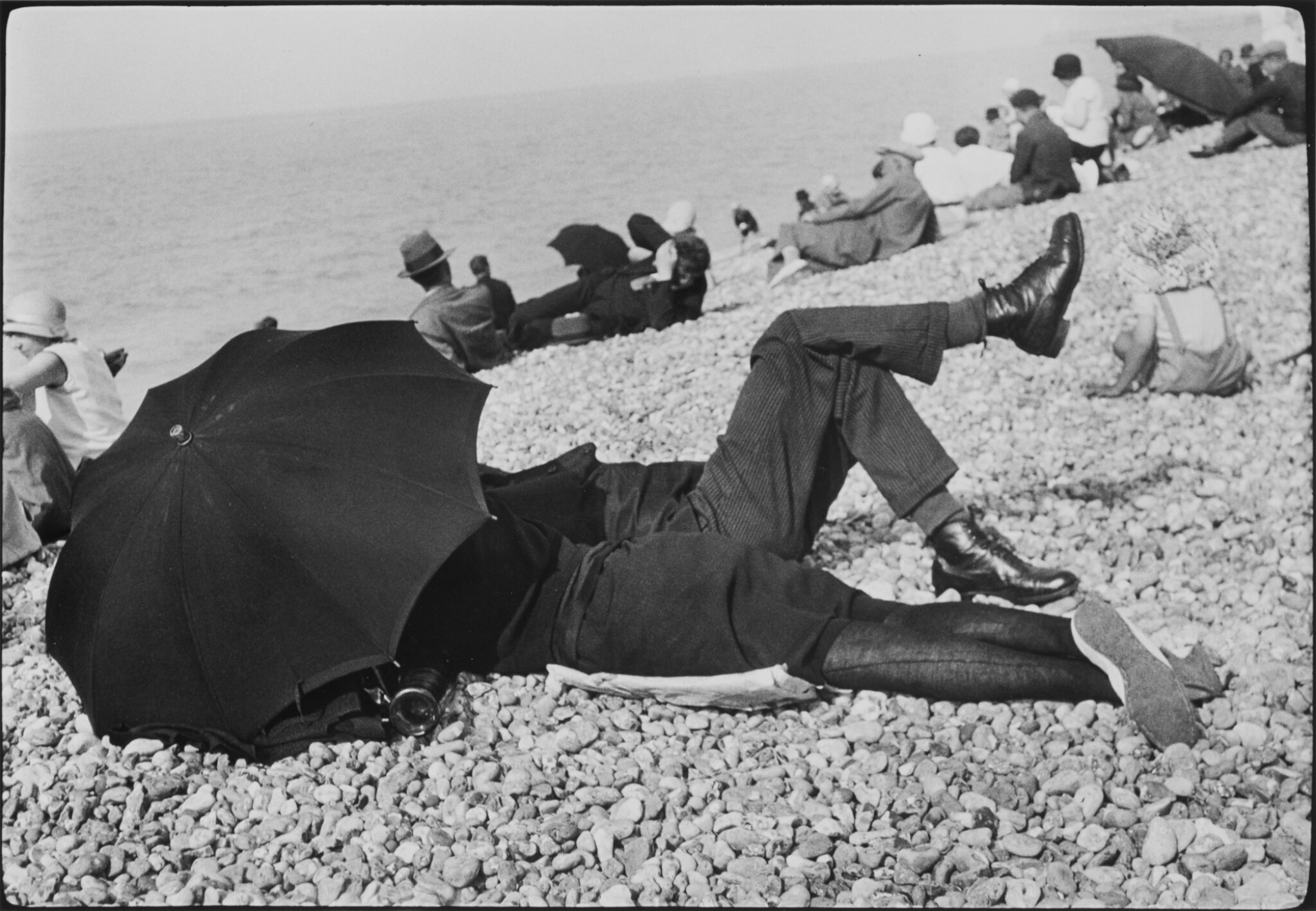
Henri Cartier-Bresson — Dieppe, France, 1926
This photograph by Henri Cartier-Bresson shows an everyday moment transformed into something extraordinary. Bresson has captured two people lying underneath an umbrella in a way that combines them into a being with 4 legs and an umbrella for a head. In this combining of chance elements Bresson forces the viewer to embrace the illusion created in the photograph and bypass the rational thought saying that this photograph shows people enjoying a day at the beach. The fact that this photograph Is set in a relatable environment shows the viewer that the extraordinary exists within in their everyday experience.
Although widely considered a documentary photographer, Bresson considered himself a surrealist and was a pioneer in creating photographs that showcased chance encounters. Using juxtaposition and clever framing, Bresson incorporated surrealist themes into the field of documentary photography and photo journalism. Bresson's technique involved adopting a state of "Objective Chance" that enabled him to be more susceptible to such chance encounters as the one above.
"Actually it's quite true that he's not waiting for anyone since he's not made an appointment, but the very fact that he's adopting this ultra-receptive posture means that by this he wants to help chance along… to put himself in a state of grace with chance, so that something might happen, so that someone might drop in"
— Andre Breton (2002) p.168
This state of objective chance was something surrealists engaged in when looking for photo opportunities. Breton believed that chance encounters were manifestations of our subconscious and the camera captured such encounters in an automatic, instinctive way, similar to other surrealist expressions such as automatic drawing and painting.
"For the surrealist poetics of metaphor – beauty seen as the strange yoking of the umbrella and the sewing machine – is an as specifically produced by chance. It comes automatically, descending on the passive, expectant poet, who waits for his dreams, his doodles, his fantasies to bring him the outlandish similes of his unconscious desires."
— Rosalind Krauss (1985) p.60
Automatism was to create without conscious thought or consideration for aesthetics and required a certain mind state that blocked out rational thought. The best known founder of surrealism André Breton described Automatism in his 1924 definition of surrealism as:
"Pure psychic automatism, by which one seeks to express, be it verbally, in writing, or in any other manner, (is) the real working of the mind. Dictated by the unconsciousness, in the absence of any control exercised by reason, and free from aesthetic or moral preoccupations."
The idea being that instead of the art being a representation of the subconscious, art created through automatism became instead, a product of the subconscious. Automatic painting and drawing techniques started to surface. This technique involved drawing lines and shapes without thinking out them. This technique relied on the subconscious of the artist producing something suggestive of their repressed thoughts onto the paper. This technique often required some conscious drawing after the initial automatism to make the image comprehensible such as this automatic drawing by André Masson.
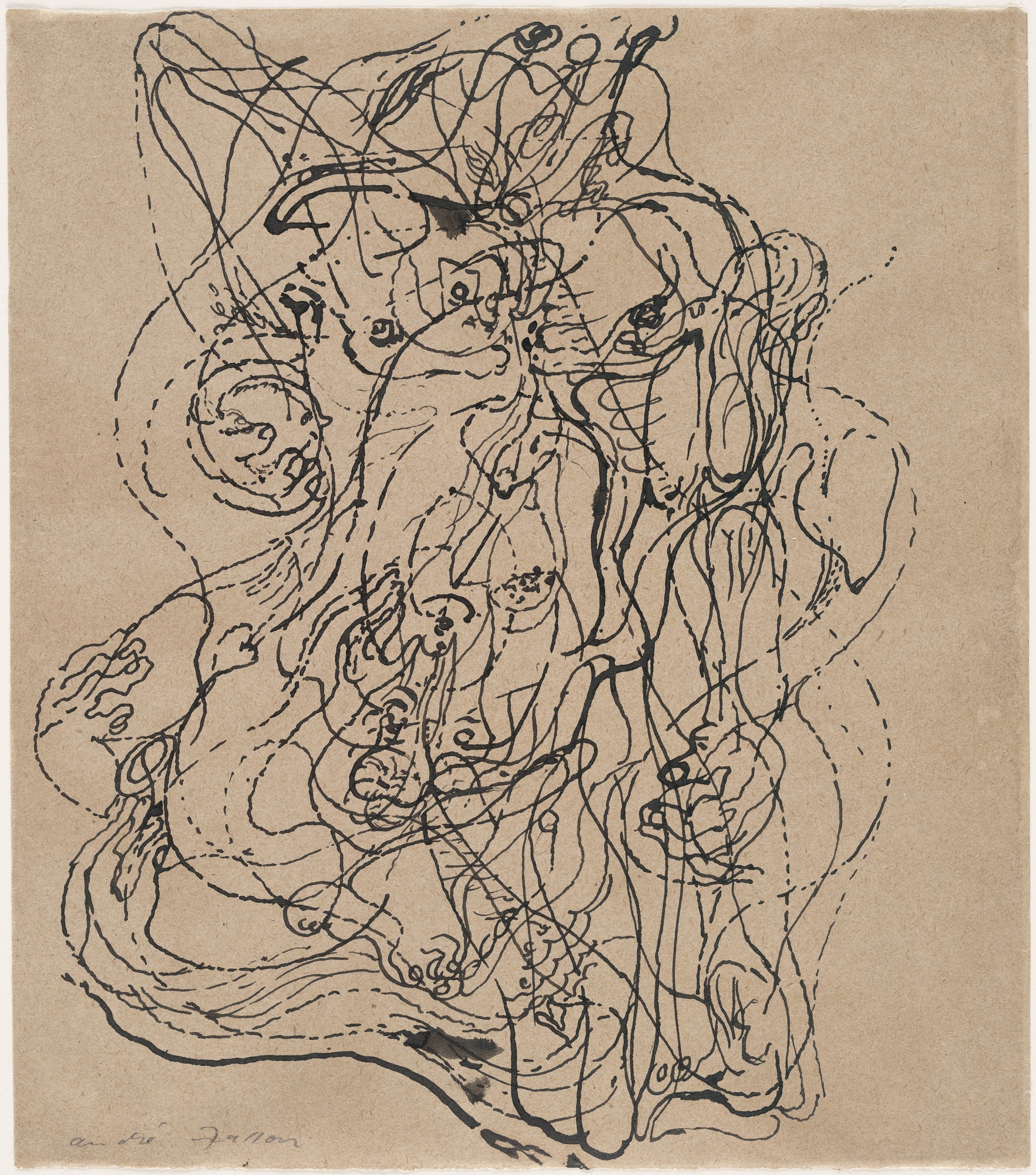
Andre Masson — Automatic Drawing, 1924
Photography is a very automatic medium of expression. A photograph is easily taken quickly and without any conscious thought, as opposed to painting or drawing that were hard to do without accidentally considering the process. As with Masson's automatic drawings, photography was a two-part process, relying on a collaboration between the conscious and unconscious to develop from the negative a photograph that represented that of dreams and the subconscious. An argument for photography expressing the surrealism of the everyday is that photography is the only medium that is actually physically taking something from the everyday.
"Surrealist photography exploits the special connection to reality with which all photography is endowed. For photography is an imprint or transfer off the real; it is a photochemically processed trace causally connected to that thing in the world to which it refers in a manner parallel to that of fingerprints or footprints or the rings of water that cold glasses leave on tables. The photograph is thus generically distinct from painting or sculpture or drawing. On the family tree of images it is closer to palm prints, death masks, the Shroud of Turin, or the tracks of gulls on beaches. For technically and semiologically speaking, drawings and paintings are icons, while photographs are indexes."
— Rosalind Krauss (1981) p.26
Surrealist photography was an appropriate way to convey the message of the everyday as strange because a photograph contains indexical signs of the everyday, transformed for effect by the camera. Whereas paintings or drawings were only iconic signs, representations of the everyday as strange. The contraction here is that surrealist photographs could never actually be pure creations of the sub conscious, because physically a photograph is an existing representation of reality. American photographer Man Ray took this process one step further by using photograms or "Rayographs" as he called them to create photographs directly from the object itself. Ray would place everyday objects onto a sheet of photosensitized paper and expose the paper to light, creating ghostly silhouettes of where the objects were. Creating a dream like image directly out of something from reality. The juxtaposition of placing objects together that would never normally have any business together brings attention to the strangeness of the objects themselves.
'Surrealism is about an effort, an energy, to find the marvelous in the everyday, to recognize the everyday as a dynamic montage of elements, to make it strange so its strangeness can be recognised.'
— Ben Highmore (2001) p.47
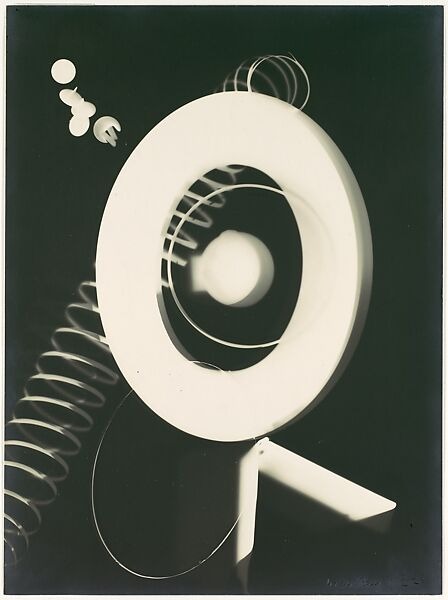
Man Ray — Rayograph
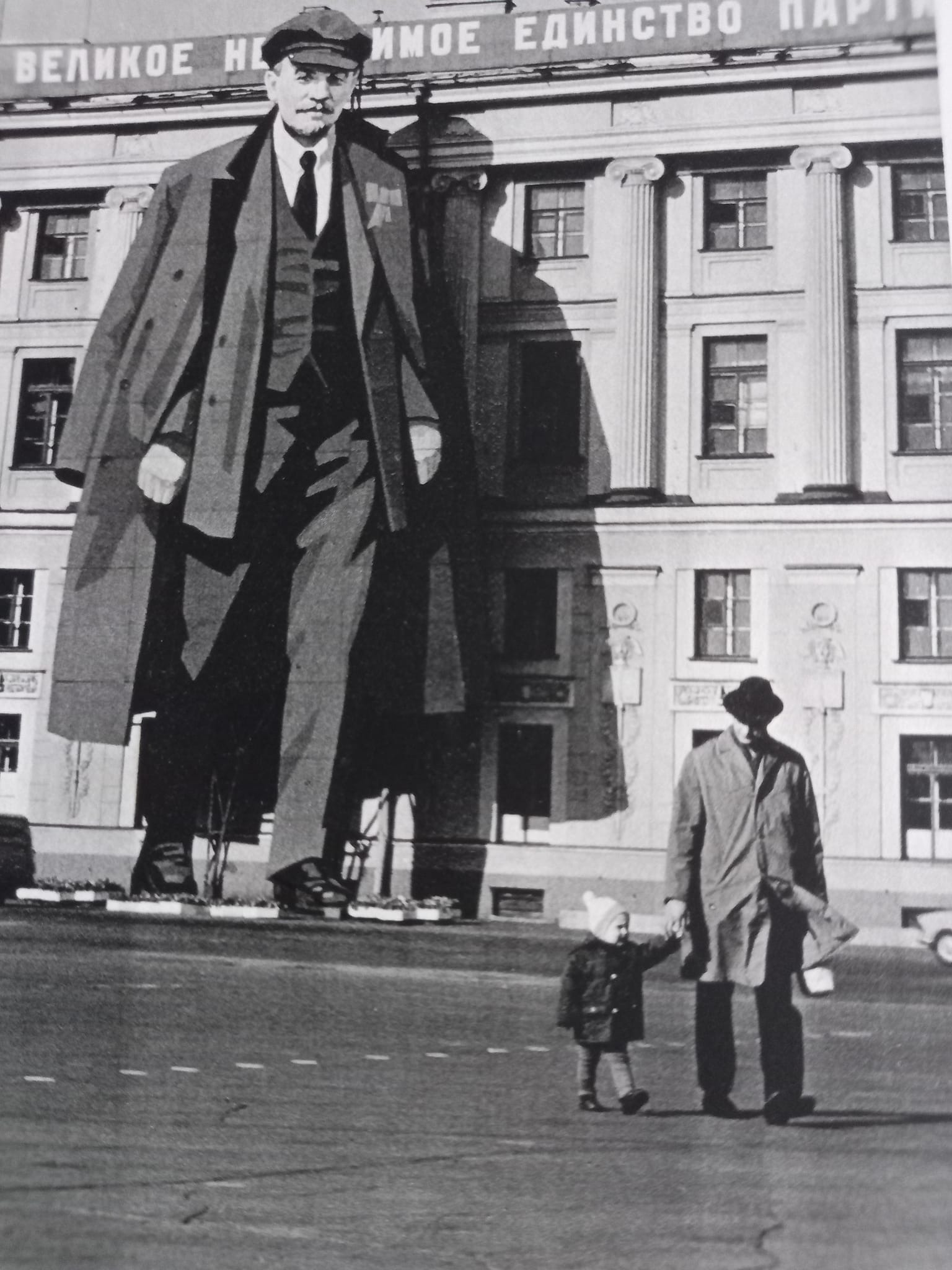
Henri Cartier-Bresson — Leningrad, Russia, 1973
This photograph by Henri Cartier Bresson uses the chance encounter of the man walking his child to bring to life an enormous portrait of Lenin in Russia. The two men in this photo looking similar and walking in the same direction transforms the town into a surreal landscape, giving life to the giant in the background and making us question for a minute which is real. The 3 subjects each dwarf each other and appear to disrupt the natural sense of scale we have when looking at photographs.
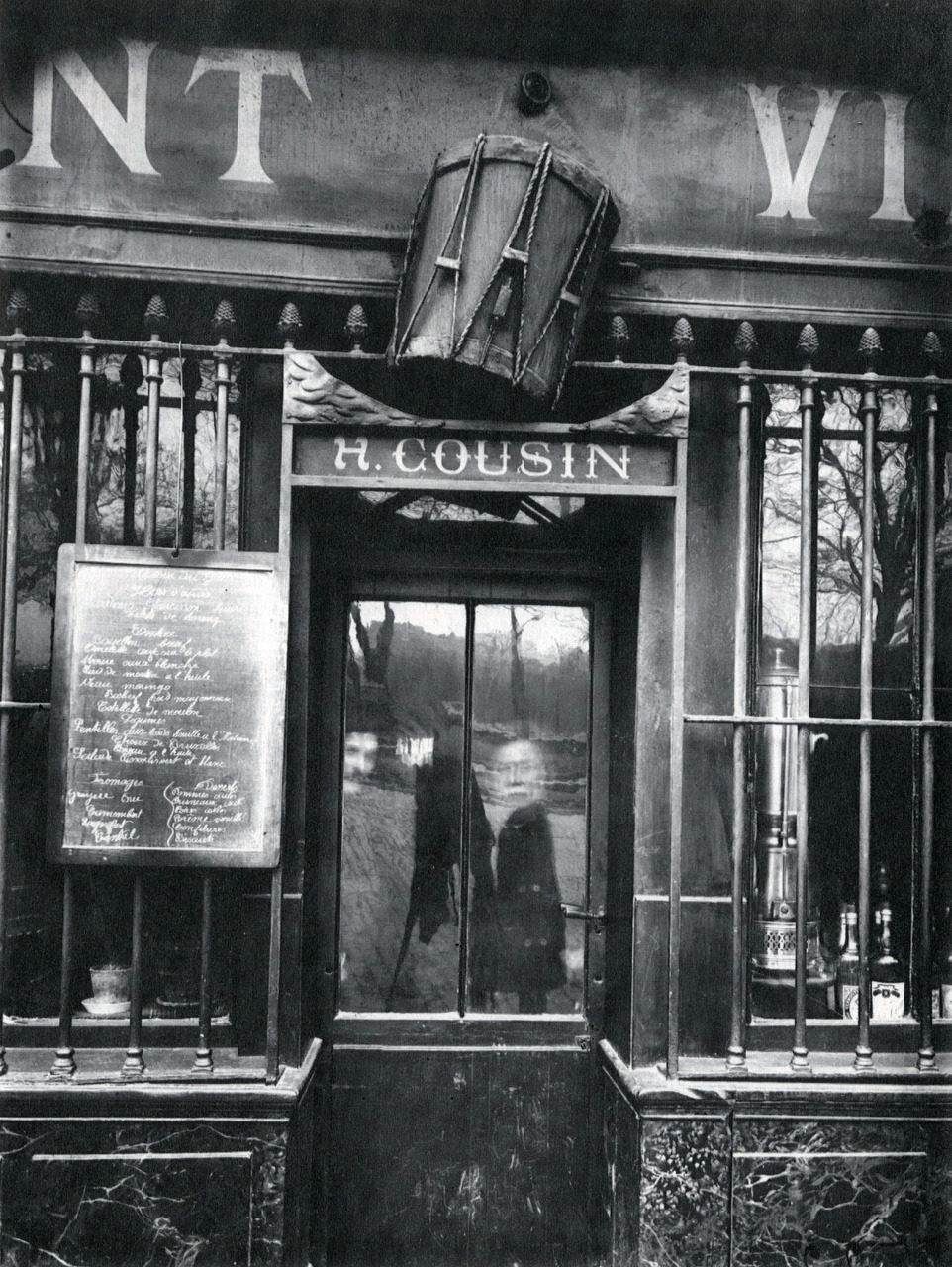
Eugene Atget — Au Tambour, 1908
In this photograph Eugene Atget uses perfect positioning to morph together a reflection and two people stood inside the shop. This juxtaposition distorts the viewers sense of what is real, instilling in the viewer a surrealist questioning of reality. The face on the right seems to distort in the window and fits onto the body on someone else shown in the reflection, whilst the shop front appears completely solid and without question of its role. This gives the photograph both real and dream like qualities. The frame chooses to show nothing more than the shop front and the reflection, singling out one part of an everyday street and making turning it into something extraordinary.
'The photographs are not interpretations of reality, decoding it, as in Heartfield's photomontages. They are presentations of that very reality as configured, or coded, or written. The experience of nature as sign, or nature as representation, comes "naturally" then to photography. It extends, as well, to that domain most inherently photographic, which is that of the framing'
— Rosalind Krauss (1981) p.29
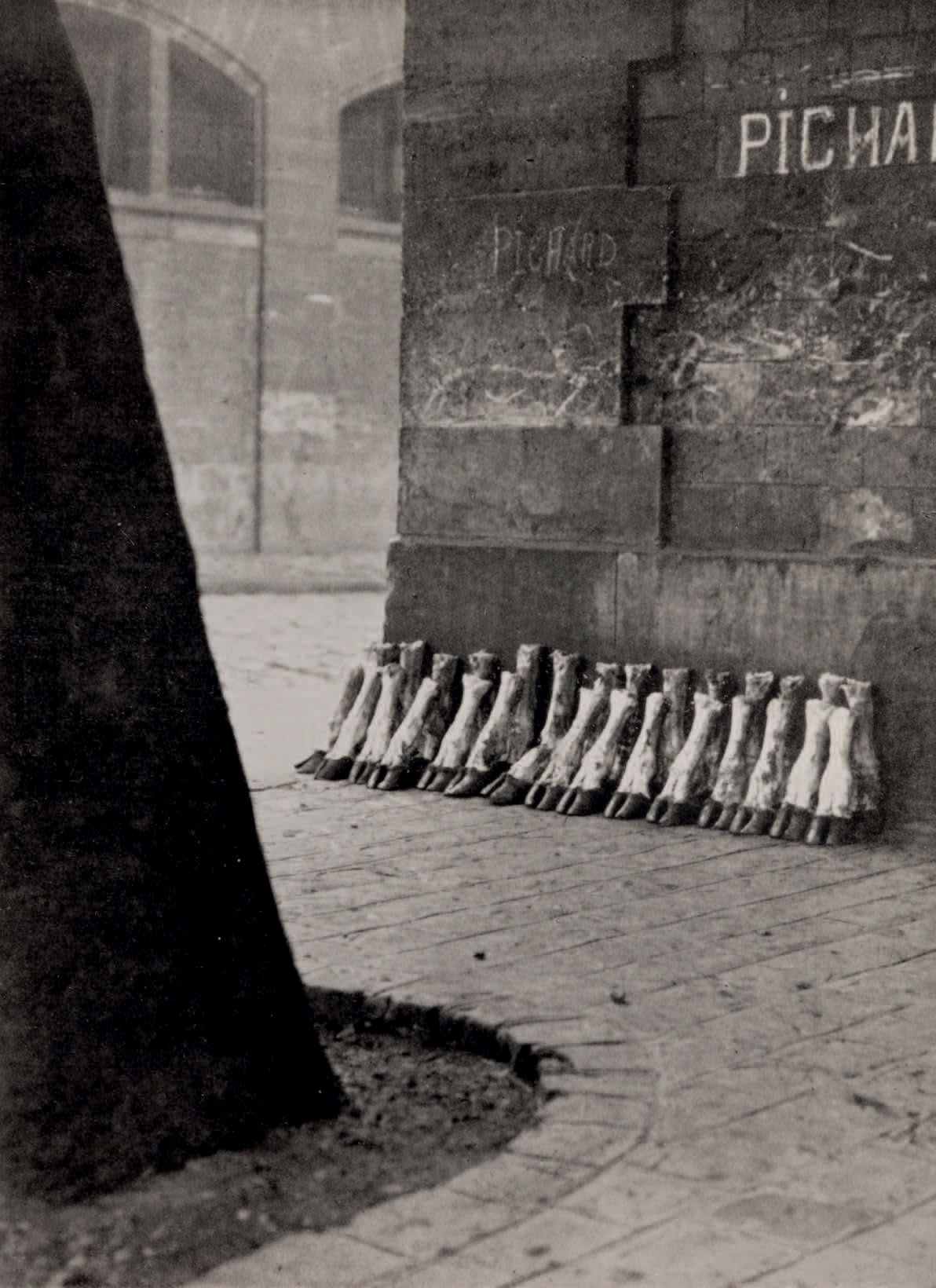
Eli Lotar
This photograph contains lots of different elements often used in early surrealist photography. Eli Lotar shows fourteen pairs of cow's hooves standing neatly against a wall. The juxtaposition of a group of cow's hooves in what looks like the alley way of a street is visually shocking and immediately raises questions about what the circumstance's are in which severed cow's hooves are propped up in an empty street. Lotar uses the frame of the camera in this photograph to select parts of the world he wants to show. Our eye is led only to the hooves and to the mystery of what is around the corner, the photographer chooses to leave out the abattoir or butchers shop around the corner and only shows the strange scene he has created.
'The frame announces that between the part of reality that was cut away and this part there is a difference; and that this segment which the frame frames is an example of nature-as-representation, nature as sign. As it signals that experience of reality the camera frame also controls it, configures it.'
— Dawn Ades (1985) p.169
Overall photography was an incredibly useful tool in the effort to get across the surrealist's bold opinions on reality and society. Photography could be used to automatically create in a way that other mediums could not. An artists subconscious could now be utilized to create in a whole new way. The Photographers I mentioned in this essay all played a part in showing society the strangeness in the everyday, this work questioned the normality of society in a way no other movement had. The light in which the surrealists showed up the small parts of people's lives influenced social attitudes and behaviour and helped people to realise the significance of the everyday.
Photography's indexical relationship to the world is important in that it brings a factor of relatability to the image. Making it more relevant to the people of the everyday society that the surrealists aimed to influence.
'Perception is better-truer-because it is immediate to experience. While representation must always remain suspect because it is never anything but a copy, a re-creation in another form, a set of signs for experience. Because of its distance from the real, representation can thus be suspected of fraud.'
— Rosalind Krauss (1985) p.20
Could the indexicality of photography present a potential contradiction? Representing that of a dream with something that points directly to the real world is a strange concept. However, surrealism was as much about showing art that represented the dream world as it was about showing the real world as a dream. Surrealist photographers used the coincidence of encounters in the everyday to show the similarities between the everyday and the dream. Photography works in unison with the latter, chemically transforming a frame of the everyday into something that resembles a dream, transcending the certainty of the reality and blurring the lines between the two.
'By carrying on its continuous surface the trace or imprint of all that vision captures in one glance, photography normally functions as a kind of declaration of the seamlessness of reality itself'.
— Rosalind Krauss (1985) p.28
Bibliography
Ades, D (1985) L'amour Fou. New York: Abbeville Press Inc
Breton, A (2002) City Gorged with Dreams: Surrealism and Documentary Photography in Interwar Paris. Manchester: Manchester University Press
Breton, A (1924) Manifesto du Surréalisme. Paris: Editions KRA
Conley, K. (2003) Modernism/modernity. Baltimore: The Johns Hopkins University Press
Highmore, B (2001) everyday life and cultural theory. London: Routledge
Krauss, R. 1981 The Photographic Conditions Of Surrealism. Cambridge: The MIT Press
Krauss, R.1985 L'amour Fou. New York: Abbeville Press Inc